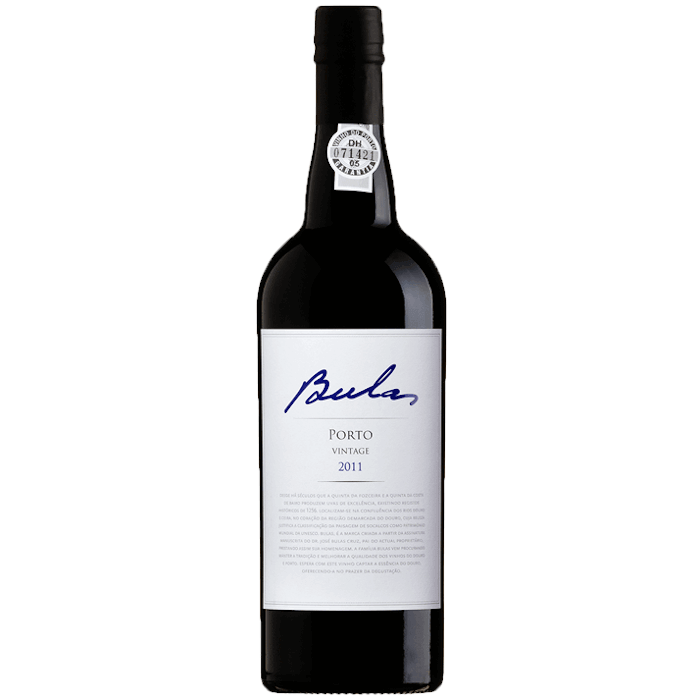
Vintage, Porto w szlachetności unikalnej osobowości, powstało z najlepszych winogron z Quinta da Costa de Baixo. Tradycyjnie winifikowane w kadziach z granitu, deptane stopami.
Po 2 latach dojrzewania w warunkach nieutlenionych, zachowuje swój młody, owocowy charakter; zostało wyprodukowanych 2808 butelek.
O kolorze głębokiej czerwieni, intensywnym aromacie dobrze dojrzałej czerwieni z długim i silnym posmakiem.
Wino jest dobrym dodatkiem zarówno do ciemnej czekolady jak i serów o intensywnych smakach
Region: Douro
Kasty: T. Nacional, T. Franca, T. Roriz
Gleba: Łupkowa
Dojrzewanie: w stali nierdzewnej
Zawartość alkoholu: 20,0 % Obj.
Butelka: Tradycyjne Porto
Bulas Vintage Port Summary (2011–2018)
Bulas (produced by M. Bulas Cruz or Bulas Family Estates) is a smaller, family-run producer from the Douro Valley in Portugal, known for quality Vintage Ports from their A-classified vineyards (e.g., Quinta da Costa de Baixo and Quinta da Fozceira in the Cima Corgo sub-region). They declare Vintage Ports selectively, typically in strong years, focusing on rich, fruit-forward styles with good structure rather than ultra-powerful blockbusters. These are often approachable earlier than top-tier houses but still ageworthy.
Here’s a year-by-year overview for declared Vintage Ports from Bulas in this period, based on available reviews, tasting notes, and market data:
- 2011 — Declared (part of the classic, widely declared, and highly acclaimed vintage). Often described as intense and dark with blue/black fruits (blueberry, blackberry, dark plum), gripping tannins, and tremendous structure. Very dark purple color. High praise in tastings (e.g., around 90–92 points from sources like Vertdevin and CellarTracker notes). Considered one of Bulas’ standout vintages in recent decades, benchmark for the house.
- 2012 — Declared. Warm, intense, and juicy with plums, berries, exotic spice, and floral notes. Firm tannins starting to integrate. Good ripeness and balance, though less universally acclaimed than 2011.
- 2013 — Limited or no general declaration by Bulas (not prominently mentioned as a Vintage Port release; some producers made single-quinta styles in this variable year).
- 2014 — Not a declared vintage year for most houses (including likely Bulas), as it was a challenging year with few classic Vintage Ports.
- 2015 — Declared by some (single-quinta focus for many), but no strong evidence of a Bulas general Vintage Port declaration. Year was ripe/fresh but not broadly classic.
- 2016 — Declared. Open, inviting nose with dark fruits and floral notes. Plenty of primary black fruits, firm/pronounced platform, and good grip (e.g., IWSC notes highlight characterful dark fruit).
- 2017 — Declared (exceptional year overall, widely declared). Bulas produced a Vintage Port in this strong vintage, though specific tasting notes are less detailed in sources; aligned with the vintage’s high quality.
- 2018 — Declared. Youthful and deep violet/opaque. Floral (violets, carnations), black fruits (plum, cassis), mint, and grippy but well-handled tannins. Long finish with black pepper notes. Produced from excellent grapes, aged briefly in stainless steel to preserve fruitiness (unfiltered). Often scored well (e.g., IWSC praise for black fruits and character).
- Overall for the period — Bulas declared in several strong years (notably 2011, 2012, 2016, 2017, 2018), skipping or limiting in weaker ones. The wines emphasize vibrant fruit (black/red berries, plum), floral/violet notes, spice (pepper, licorice), and solid but approachable tannins. 2011 stands out as the strongest and most celebrated in this range. These are generally good-value Vintage Ports compared to big names, with drinking windows starting earlier (5–10+ years) but capable of longer aging.

